
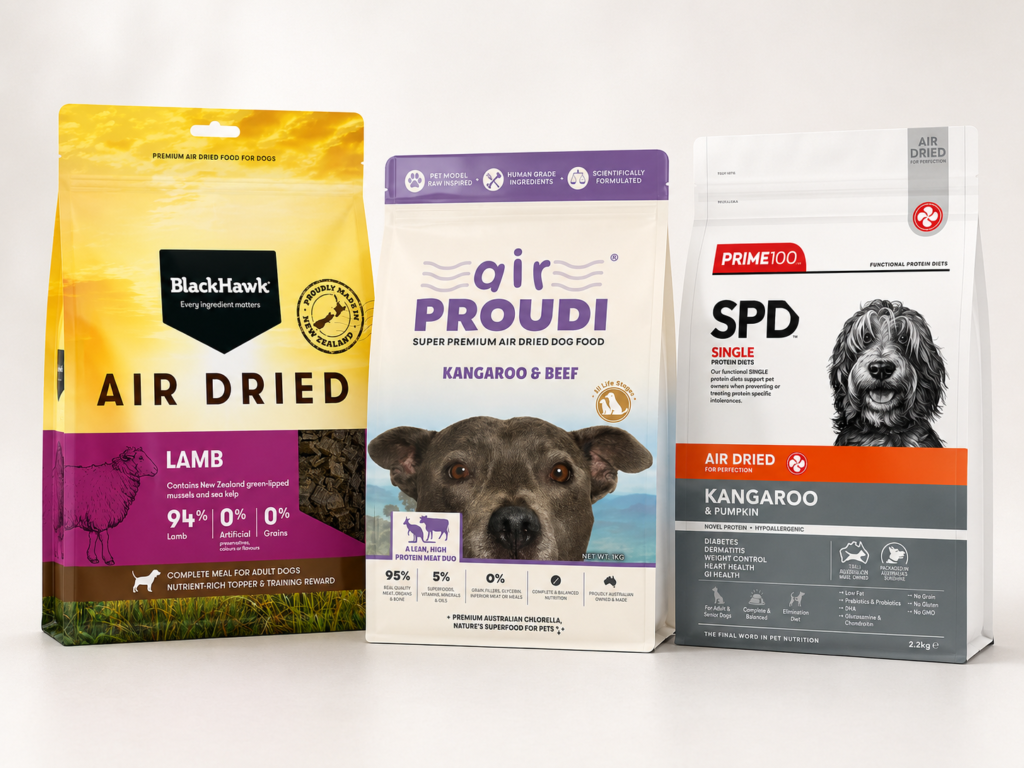
Source: BlackHawk Air Dried Lamb, Air Proudi Kangaroo and Beef and Prime 100 SPD Kangaroo and Pumpkin
You may feed your dog or cat kibble, canned food, gently cooked food or another complete diet—but still find yourself looking at a packet of raw or freeze-dried treats and wondering whether the two can be mixed.
The basic answer is that a pet does not need to eat a completely raw diet to be offered an occasional raw treat. However, the more important question is not whether raw treats can be combined with cooked food. It is whether the particular treat is suitable for your pet and whether you are comfortable managing the food-safety risks associated with uncooked animal products.
Raw treats can include pieces of raw or frozen meat, freeze-dried meat, organs, raw meaty bones and some dehydrated products. Although these treats may look dry and shelf-stable, they have not necessarily been cooked at a temperature high enough to destroy harmful microorganisms.
Will mixing raw treats with kibble upset digestion?
There is no general nutritional rule requiring pets to eat either an entirely raw or entirely cooked diet. Giving a small raw treat does not mean you must replace your pet’s regular food or begin following a complete raw-feeding program.
Dogs and cats already consume meals containing combinations of protein, fat, fibre and carbohydrates. Their digestive systems do not require every ingredient in a meal to have undergone the same type of processing.
Some pets may nevertheless experience vomiting, loose stools or increased wind after eating an unfamiliar treat. This is more likely to be related to the treat’s richness, fat content, quantity, protein source or the individual pet’s sensitivity than to the simple act of combining raw and cooked food.
Introduce any new treat in a small amount and monitor your pet. A large portion of liver, fatty meat or an unfamiliar chew can cause digestive upset regardless of whether it is raw, cooked or dried.
What counts as a raw treat?
Identifying a raw product is not always as straightforward as it sounds. Raw treats may be sold as:
- frozen raw meat or organs
- freeze-dried raw meat
- raw food toppers
- air-dried meat
- raw meaty bones
- raw-coated kibble or treats.
Freeze-drying removes moisture by freezing the food and drying it under a vacuum. Dehydration removes moisture using circulating warm air. Neither process necessarily cooks the meat or eliminates every harmful microorganism.
The US Centers for Disease Control and Prevention classifies frozen, freeze-dried and dehydrated uncooked animal proteins as raw pet food. It states that freezing, freeze-drying and dehydration may reduce microorganisms but do not reliably eliminate all of them.
Air-dried products require closer inspection because the term describes a broad range of manufacturing methods. Some are cooked sufficiently during production, while others remain technically raw. Look for clear information from the manufacturer rather than assuming that a dry texture means the product has been cooked.
The main concern is food safety
Raw animal products can carry organisms such as Salmonella, Listeria and certain strains of E. coli. Contamination does not always change the food’s appearance, smell or texture.
A pet exposed to contaminated raw food may become unwell, but it may also carry or shed microorganisms without showing obvious symptoms. Contamination can then spread through saliva, faeces, feeding bowls, hands, floors and food-preparation surfaces.
This does not mean every raw treat is contaminated or that every pet eating one will become ill. It means the risk cannot be ruled out simply because a treat comes from a reputable-looking packet, contains one ingredient or has been frozen.
Does “single ingredient” mean safer?
A single-ingredient treat can be appealing because the owner knows exactly which animal protein is being offered. It may also be useful when avoiding unnecessary flavours, colours, sweeteners or fillers.
However, a short ingredient list does not tell you how the meat was sourced, handled, processed or tested. “One hundred per cent chicken” describes the ingredient—not the manufacturer’s pathogen-control procedures.
When evaluating a raw treat, consider asking the manufacturer:
- Is the product raw or fully cooked?
- Is there a validated pathogen-reduction step?
- Is the finished product tested for organisms such as Salmonella, Listeria and E. coli?
- How should the product be stored after opening?
- Where are the meat and organs sourced?
- Does the product comply with an applicable pet-food manufacturing standard?
In Australia, the Australian Veterinary Association supports pet foods and treats being compliant with the Australian pet-food manufacturing and marketing standard.
Testing and controlled manufacturing can reduce risk, but they cannot turn every uncooked product into a risk-free one.
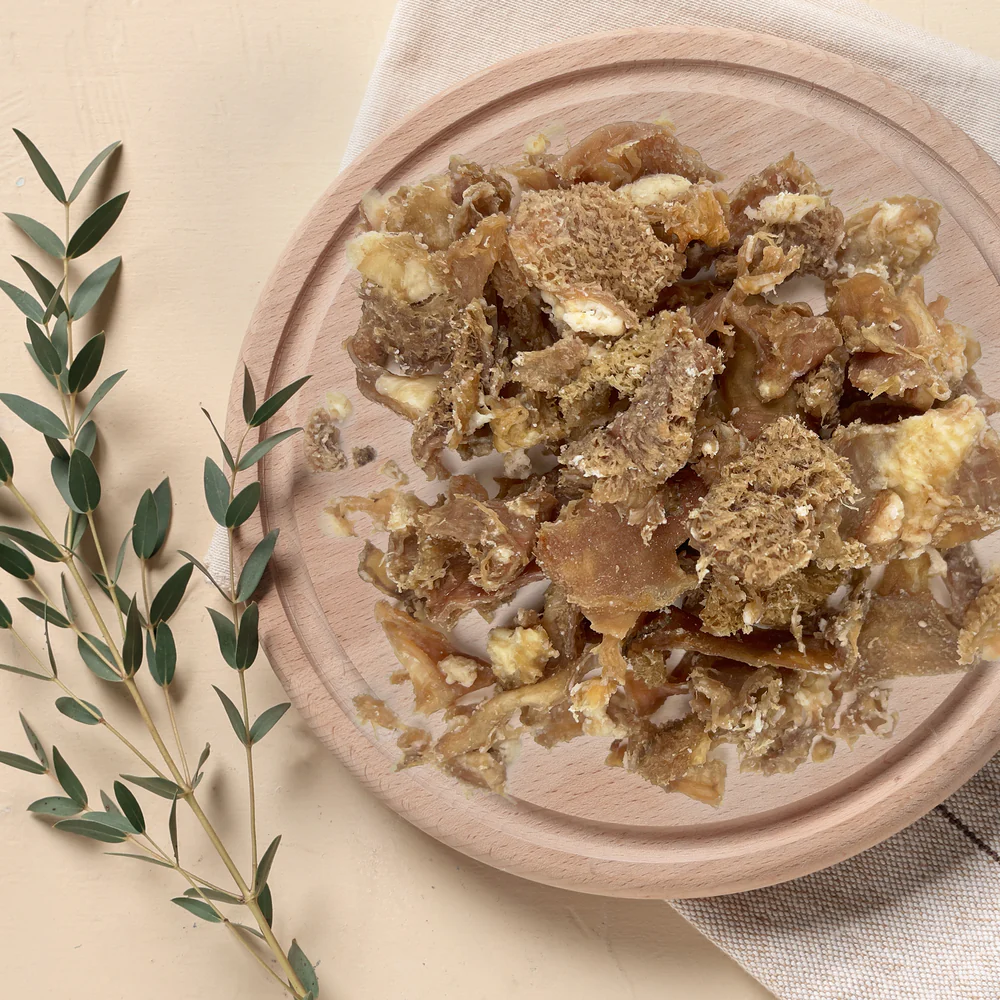
Source: Wild Kind Beef Tripe
Who should be especially cautious?
Raw treats may be a poor choice where the pet or someone in the household is more vulnerable to foodborne illness.
Extra caution is appropriate in homes with:
- young children
- pregnant people
- older adults
- people with weakened immune systems
- puppies or kittens
- elderly pets
- pets receiving immune-suppressing medication
- pets with significant underlying illness.
The CDC specifically identifies young children, adults aged 65 and over, pregnant people and those with weakened immune systems as groups more likely to become seriously ill from foodborne microorganisms.
A raw treat may also be inappropriate for a pet with pancreatitis, food-responsive disease, chronic gastrointestinal problems, kidney disease or a veterinary elimination diet. In these situations, speak with your veterinarian before adding extras—even if the treat appears natural or contains only one ingredient.
Raw bones deserve separate consideration
Raw bones are sometimes grouped together with small freeze-dried or dehydrated treats, but they introduce additional physical risks.
A bone or large piece of chew may become lodged in the throat, oesophagus, stomach or intestines. Sharp fragments can injure the mouth or digestive tract, and very hard items can damage teeth. The FDA warns that swallowed bones may cause gastrointestinal obstruction or internal injury.
Never leave a pet unattended with a bone or long-lasting chew. Choose a product appropriate for the animal’s size, chewing style, dental health and ability to chew properly. Dogs that swallow food quickly, have damaged teeth or have previously experienced an obstruction may require a different type of treat.
Keep treats in proportion
Whether a treat is raw, cooked, baked or air-dried, it should not displace too much of the pet’s nutritionally complete food.
Most treats are intended for supplementary feeding and are not complete and balanced. A common veterinary nutrition guideline is to keep treats and other extras to no more than approximately 10 per cent of the pet’s daily calorie intake.
This is especially important with freeze-dried liver, fatty meat and dense chews, which can provide more calories than their small size suggests.
For pets eating a veterinary therapeutic diet, even a small amount of another food may interfere with the diet’s purpose. Confirm appropriate treats with your veterinarian.
Safer handling if you choose to feed raw treats
Owners who decide to offer raw treats should handle them as carefully as uncooked meat intended for people.
Wash your hands thoroughly before and after handling the treat. Use a clean bowl or washable feeding surface, clean anything touched by the food and prevent the pet from carrying raw treats around beds, rugs or children’s play areas.
Store the product exactly as directed. Keep frozen products frozen until needed and thaw them in the refrigerator in a sealed container. Do not leave leftovers sitting at room temperature. Avoid allowing your pet to lick faces, open wounds or small children immediately after eating.
The FDA recommends washing hands for at least 20 seconds after handling pet food or treats and regularly cleaning bowls and feeding utensils with hot, soapy water.
So, can you feed raw treats without feeding a raw diet?
Yes, in the sense that a pet’s regular diet does not have to be raw before it can physically eat a raw treat. The occasional treat will not automatically make a complete cooked diet incompatible or unbalanced, provided the treat remains a small part of the pet’s overall intake.
However, raw treats carry food-safety considerations that cooked treats do not carry to the same degree. Freeze-dried, frozen and dehydrated raw products should still be handled as raw animal products unless the manufacturer confirms they have undergone a validated cooking or pathogen-control process.
The best choice depends on your pet, your household and the product itself. Read beyond the front of the packet, ask how the treat was processed and tested, keep portions modest, and involve your veterinarian when your pet has a medical condition or specialised diet.
Feeding clean is not simply about choosing the least processed product. It is about understanding what is in the food, how it was produced and whether it is genuinely appropriate for the pet eating it.