
Single Ingredient Dog Treats: What Are They and Are They Better?
When you pick up a packet of dog treats, the ingredient list can sometimes feel longer than it needs to be. Meat meals, starches, binders, colours, flavours, humectants, preservatives and “natural flavours” can all appear in products that are marketed as simple or healthy. That does not automatically make a treat bad, but it can make it harder for pet owners to understand what they are actually feeding.
That is where single ingredient dog treats have become popular. They are simple, easy to recognise and usually very transparent. But are they always better? The answer is: sometimes — but it depends on the dog, the treat and how it is used.
What are single ingredient dog treats?
A single ingredient dog treat is exactly what it sounds like: a treat made from one ingredient only. For example, this might be dried beef liver, kangaroo, chicken breast, lamb lung, fish skin, rabbit ears, duck feet or freeze-dried salmon.
There are no added fillers, colours, flavour enhancers, grains, starches or binders. Instead of trying to create a shaped biscuit or soft chew, the treat is usually made by drying, air-drying, freeze-drying or dehydrating the original ingredient.
For many dog owners, this simplicity is the appeal. You are not trying to decode a long label. You know what the treat is. If the bag says “beef liver” and the ingredient list says “beef liver”, the decision is much easier.
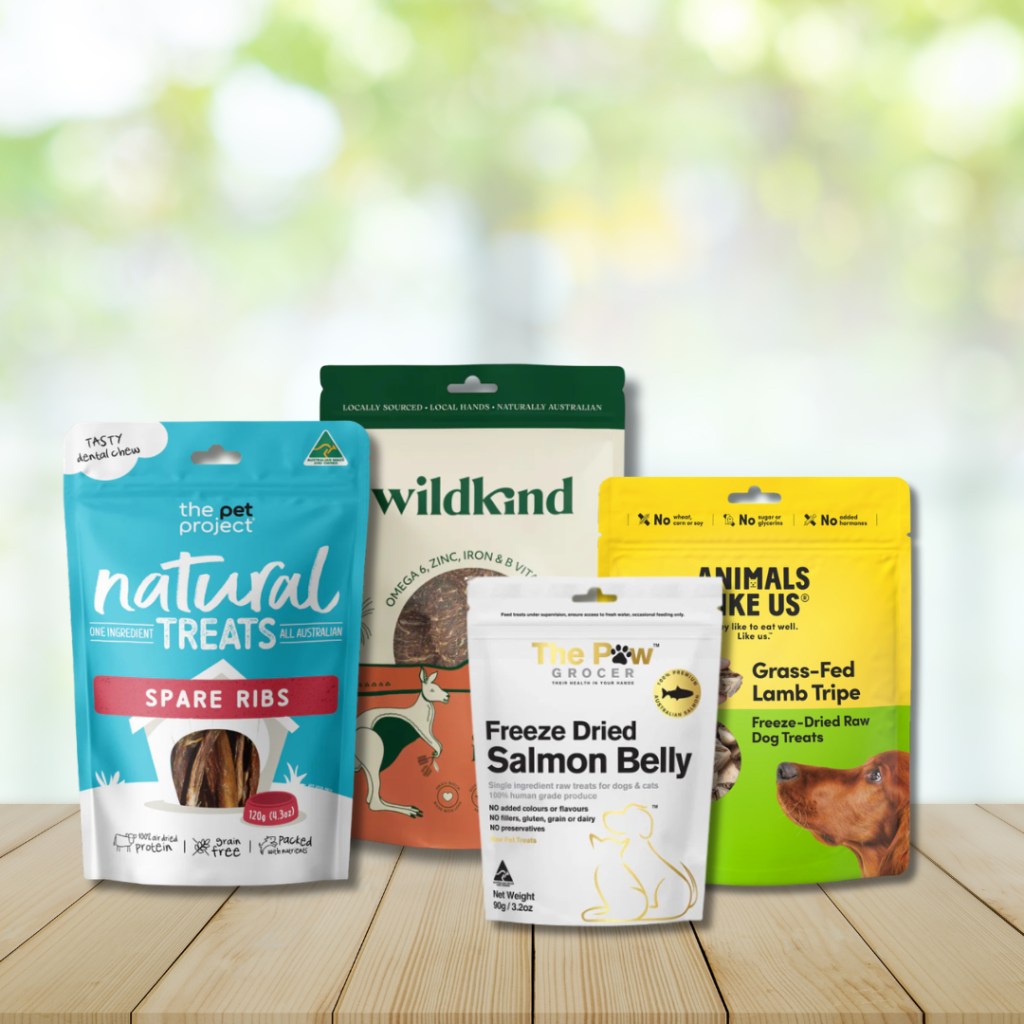
Why do people choose single ingredient treats?
The biggest reason is transparency. A shorter ingredient list means fewer unknowns, and that can be helpful for dogs with sensitive stomachs, suspected food intolerances or owners who simply prefer a cleaner approach to feeding.
Single ingredient treats can also make it easier to avoid a specific protein. For example, if a dog does not tolerate chicken well, a clearly labelled single protein kangaroo or fish treat may be easier to assess than a mixed treat with several animal proteins hidden inside the ingredient list.
This matters because food reactions in dogs are often linked to proteins, with beef, dairy, chicken and wheat commonly reported among the more frequent triggers in dogs with adverse food reactions. Not every itchy or unsettled dog has a food allergy, and proper diagnosis should involve a vet, but clearer ingredient labels can make day-to-day management easier once a trigger is known.
Single ingredient treats can also be useful for training because many are highly palatable. Meaty treats such as liver, lung or fish tend to be appealing to dogs, which can make them useful when you need a high-value reward. The downside is that rich treats may not suit every dog in large amounts, especially dogs with sensitive digestion or dogs that need lower-fat options.
Are single ingredient treats healthier?
Not automatically.
This is one of the most important things to understand. A single ingredient treat can be cleaner and more transparent, but that does not mean it is suitable for unlimited feeding. Treats are generally intended to be fed in addition to a complete diet, not to replace balanced meals. Treats and supplements are not complete feeds and are usually intended to be fed alongside a complete diet.
For example, dried liver may be a simple, single ingredient treat, but it is still rich. Fish skin may be natural, but it can still be energy-dense. Duck feet or chicken necks may be popular chews, but they may not suit every dog, especially dogs that gulp, have dental issues or need careful supervision with chews.
So the better question is not “are single-ingredient treats always healthier?” The better question is: does this treat suit my dog, and am I feeding it in the right amount?
The 10% treat rule
Even clean treats should still be treated as treats. A helpful general rule is that treats should make up no more than about 10% of a dog’s daily food allowance or calorie intake. If treats go over this amount, then it may be helpful to reduce the dog’s regular food accordingly to avoid overfeeding.
This matters because even simple treats can add up quickly. A few pieces of dried liver, a chew after dinner and some training rewards during the day may seem small, but they can contribute more energy than expected — especially for small dogs or those that are “good-doers” such as the Labrador.
If your dog is gaining weight, carrying extra condition, or has been advised to lose weight, treats need to be counted as part of the overall diet. The amount of food a dog needs depends on their diet, lifestyle and health, and dogs should be fed the right amount to avoid becoming underweight or overweight.
When single ingredient treats are a great choice
Single ingredient treats can be a strong option when you want simplicity and clarity.
They are especially useful for:
- dogs with known ingredient sensitivities;
- dogs on a limited-ingredient diet;
- owners who want to avoid unnecessary fillers or additives;
- training rewards where a high-value treat is needed;
- rotation feeding, where you want to introduce one protein at a time;
- pet owners who prefer short, recognisable ingredient lists.
They also fit well with a clean feeding approach. At Petoody, these treats usually sit closest to our Pure rating: minimal ingredients, easy-to-understand labels and no unnecessary extras.
When they may not be the best option
Single ingredient does not always mean gentle, low-calorie or suitable for every dog.
Some treats are very rich. Liver, for example, is popular and highly palatable, but it should generally be fed in small amounts. Some dried chews are tough and may not suit senior dogs, dogs with dental problems or dogs that swallow treats too quickly. Some proteins may not suit dogs with known sensitivities. And some treats may be too large or too calorie-dense for toy breeds.
There is also the issue of balance. A dog cannot live on treats alone, even if the treats are natural. Their main diet still needs to provide the right nutrients in the right amounts. The World Small Animal Veterinary Association’s nutrition guidelines emphasise the importance of an individually tailored nutrition plan, particularly because both malnutrition and obesity can affect companion animals.
What to look for when choosing single ingredient treats
Start with the label. The ingredient list should be clear and specific. “Kangaroo” is clearer than “meat”. “Beef liver” is clearer than “animal derivatives”. Specific ingredients help you understand exactly what your dog is eating.
Next, consider the texture and size. Small, soft pieces may be better for training. Larger chews may be better for enrichment, but should be supervised. Very hard chews may not suit every dog.
Then think about your dog’s needs. A highly active dog may tolerate richer treats more easily than a small, sedentary dog. A dog with a sensitive stomach may need tiny amounts introduced slowly. A dog with a known allergy should avoid that trigger across all food, treats and toppers.
Finally, check how the treat fits into your dog’s overall diet. If you are feeding more treats during training, reduce the regular food slightly and keep an eye on body condition.
So, are single ingredient dog treats better?
They can be — especially when your priority is simplicity, transparency and avoiding unnecessary additives.
But they are not automatically better for every dog, and they are not a replacement for a complete and balanced diet. The best single ingredient treat is one that suits your dog’s size, chewing style, sensitivities, activity level and overall feeding plan.
At Petoody, we love single ingredient treats because they make label reading simple. You can see what is in the bag, understand why it is there, and choose products with confidence.
The goal is not to make feeding complicated. It is to make it clearer.
Simple ingredients. Thoughtful choices. Happier pets.